
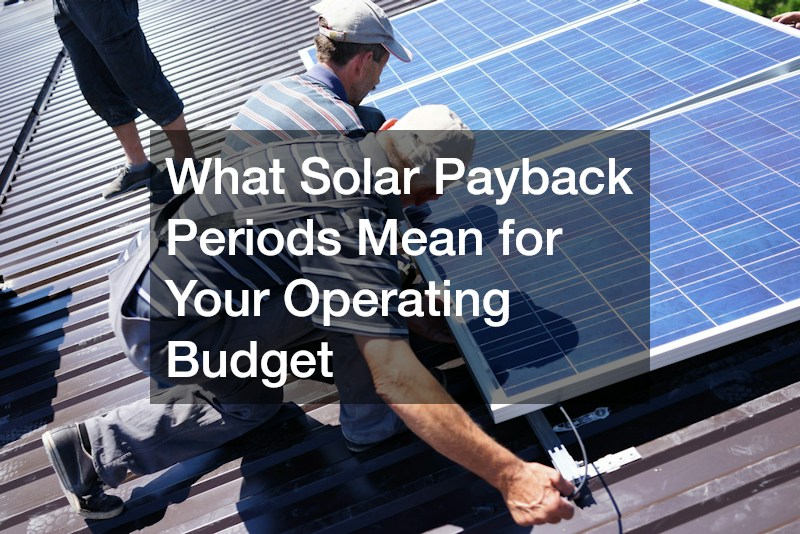
Thinking about going solar often comes down to one question: how long until it actually pays for itself? The payback period is more than a sales pitch number, it is a planning tool that affects your monthly cash flow, your long-term budget, and how you weigh solar against other investments. Understanding what drives this timeline helps you avoid surprises and make a decision that fits your financial goals, not just your rooftop.

Calculating Your Break-Even Timeline
The payback period is simply the amount of time it takes for the money you save on electricity to equal what you spent upfront. To calculate it, divide your net system cost, after any incentives or rebates, by your estimated annual savings on utility bills. Most residential systems land somewhere between six and twelve years, though this varies widely based on location, electricity rates, and how the system was financed. Knowing this number before signing a contract gives you a realistic benchmark to compare offers from different installers.
- Net system cost divided by annual savings equals years to break even
- Average payback ranges from 6 to 12 years nationally
- Shorter payback periods generally mean higher long-term returns
- Cash purchases typically break even faster than financed systems
Upfront Costs and Available Incentives
The sticker price of a system is rarely the final number you pay, since federal, state, and local incentives can significantly reduce the amount financed or paid in cash. The federal solar tax credit, for example, allows homeowners to deduct a meaningful percentage of installation costs from their taxes, directly shortening the payback window. Some states layer on additional rebates or performance-based incentives that further reduce the net cost. Before comparing payback estimates between companies, confirm which incentives are already factored into the quote, since this can make two seemingly different offers more comparable than they first appear.
- Federal tax credits reduce the net installation cost significantly
- State rebates vary widely and may require separate applications
- Utility company incentives sometimes offer upfront discounts or bill credits
- Local permitting fees and inspection costs should be included in total price
Monthly Utility Savings and Rate Changes
Your monthly electricity bill is the engine driving your payback timeline, so understanding how utility rates behave over time matters as much as the installation cost itself. Utility rates have historically risen a few percent each year, which means the value of the electricity your system offsets tends to increase, not stay flat. This makes long-term projections somewhat conservative, since most calculators use current rates rather than assuming future increases. Homeowners who track their actual usage patterns, rather than relying solely on estimates, often find their real savings exceed initial projections once rate hikes are factored in.
- Average utility rate increases range from 2 to 4 percent annually
- Net metering policies affect how much credit you receive for excess energy
- Time-of-use rate plans can change the value of solar production
- Seasonal usage shifts should be reviewed when estimating savings
System Size and Equipment Quality
A system sized correctly for your actual consumption will produce a more predictable payback period than one that is oversized or undersized for your household needs. Opting for home solar panels with higher efficiency ratings can cost more initially but often shortens the payback period by generating more electricity per square foot of roof space. Inverter choice also plays a role, since microinverters and power optimizers tend to perform better on roofs with partial shading compared to a single central inverter. Working with an installer who performs a detailed energy audit before recommending equipment helps ensure the system matches your real-world usage rather than a generic estimate.
- Correctly sized systems avoid both energy shortfalls and wasted capacity
- Higher efficiency panels cost more but may pay off faster long term
- Microinverters handle shading better than traditional string inverters
- Equipment warranties often range from 10 to 25 years depending on component

Financing Method and Loan Terms
How you pay for a system changes the shape of your payback period considerably, even if the equipment itself is identical. A cash purchase typically produces the fastest break-even point because there is no interest accruing on a loan balance. Solar loans spread the cost over several years, which lowers the upfront burden but extends the time before your savings truly outpace your payments. Leases and power purchase agreements, by contrast, rarely offer a traditional payback period at all, since you never own the system outright and the savings come from lower monthly payments rather than eventual ownership.
- Cash purchases usually offer the shortest payback timeline
- Solar loans extend payback but reduce upfront financial strain
- Leases and PPAs trade ownership for predictable monthly savings
- Loan interest rates and terms should be compared across multiple lenders
Maintenance Costs and Long-Term System Performance
A payback calculation is only as accurate as the assumptions about long-term performance, so it is worth understanding how maintenance and equipment degradation factor into the equation. Solar panels typically lose a small percentage of efficiency each year, often around half a percent, which slightly extends the payback timeline compared to an idealized estimate. Routine maintenance costs are generally low, but inverter replacement partway through the system’s lifespan is a realistic expense to budget for. Factoring in these ongoing costs from the start, rather than treating the system as maintenance-free, gives you a payback estimate that holds up over the full 20 to 25 year lifespan of the equipment.
- Panel efficiency typically declines about 0.5 percent per year
- Inverters often need replacement once during a system’s lifetime
- Routine cleaning and inspections help maintain peak production
- Monitoring software can flag performance issues before they affect savings
Payback periods are not a single fixed number but a moving target shaped by incentives, financing choices, equipment quality, and how utility rates evolve over time. The clearer you are on these variables, the more confidently you can compare quotes and fit a system into your operating budget. Before committing, ask any installer to walk through their payback assumptions line by line so you understand exactly what you are paying for and when you can expect it to pay off.